


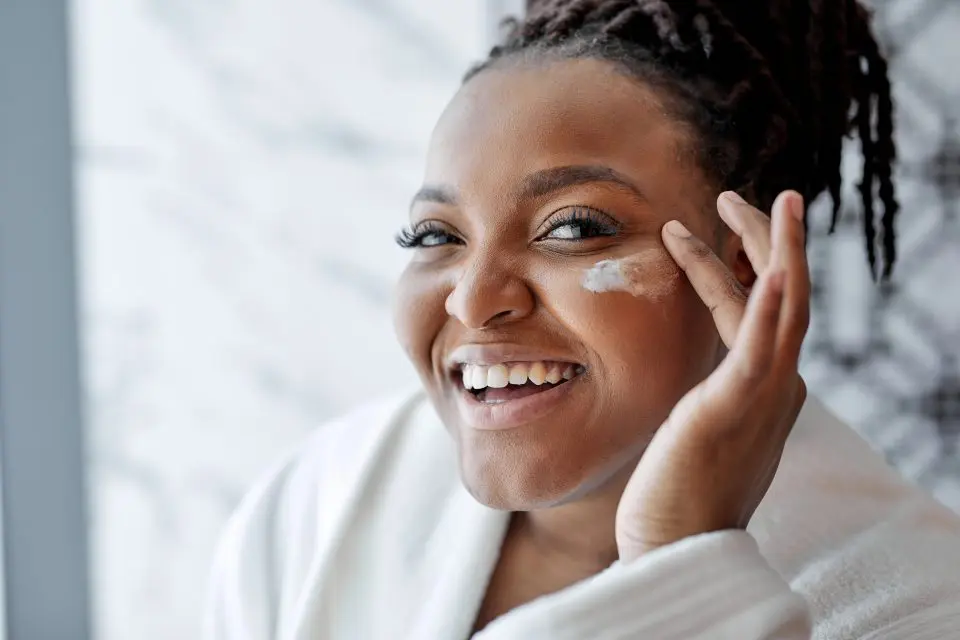

Because when you’re blessed with melanin, the cold-weather struggle is real—and visible.
Winter does not play fair. The moment temperatures drop, that dewy glow you spent all summer cultivating? Gone. Replaced by ashiness, dullness, and hyperpigmentation that announces itself with zero subtlety. Blame it on dry air, aggressive indoor heating, and a skincare routine that wasn’t built for this level of atmospheric assault.
But here’s the truth: You don’t need to overhaul your entire medicine cabinet. What you need is precision—the right formulas, in the right order, designed to work with melanin-rich skin, not against it.
Consider this your new seasonal playbook.
Why Winter Hits Melanin-Rich Skin Differently
Let’s start with the science. Cold air outside has almost no humidity. Indoor heat strips away whatever moisture remains. When your skin barrier starts to fail, the evidence is immediate: ashiness that shows up like a spotlight, dark spots that look even darker against dull, dehydrated skin, and makeup that refuses to sit properly.
Here’s what dermatologists know but rarely emphasize: Melanin-rich skin is naturally more susceptible to transepidermal water loss. Translation? Your skin loses hydration faster than you think. Which means moisture isn’t just nice to have—it’s structural. It’s everything.
The Layering Strategy Everyone Gets Wrong
If your products aren’t applied in the correct sequence, they won’t perform. Period. Here’s the winter-approved hierarchy that actually works:
Start with a hydrating toner on damp skin. Look for glycerin, aloe, or panthenol. This step reintroduces water post-cleanse—think of it as priming the canvas.
Follow with hyaluronic acid serum. Apply it while your skin is still slightly moist. Why? Because hyaluronic acid binds to water, and in dry climates, it can actually pull moisture out of your skin if there’s nothing underneath to grab onto. Press it in gently. No rubbing.
Lock it in with a cream moisturizer. Lotions won’t cut it in winter. You need something with ceramides, cholesterol, shea butter, or squalane—ingredients that rebuild the barrier and trap hydration where it belongs.
Seal with oil (optional, but transformative). A few drops of jojoba, marula, or rosehip oil pressed over everything else creates a luminous, breathable seal. The formula is simple: water, then humectant, then cream, then oil. Follow it religiously.
Slugging Without the Breakouts
The internet loves slugging—slathering petrolatum over your face as a final occlusive layer. And yes, it works for barrier repair. But if you’re acne-prone? It’s a gamble.
Better alternatives exist. Squalane oil is lightweight and non-comedogenic. Ceramide balms offer the same occlusive benefits without the greasiness. Dimethicone-based barrier creams seal moisture in while still letting skin breathe.
If you do slug, keep it strategic: once or twice a week, applied thinly, and never over active breakouts. The goal is radiance, not congestion.
The Underrated Power Duo: Glycerin and Urea
Two ingredients that deserve far more attention than they get.
Glycerin draws water directly into the skin and prevents that gray, dusty appearance that plagues deeper tones in winter. It works beautifully under makeup and, in dry conditions, can outperform hyaluronic acid.
Urea (in 5–10% concentrations) is quietly elite. It hydrates, softens rough patches, and gently exfoliates without irritation. For hyperpigmentation-prone skin, urea smooths away dead cell buildup that makes dark spots look more pronounced. It’s especially effective around the mouth, chin, jawline—and on the body, where knees, elbows, and legs tend to show ashiness first.
Smooth, hydrated skin reflects light better. And for melanin-rich complexions, that means natural radiance without shimmer.
The Sunscreen Situation: Avoiding the Gray Cast
Yes, Black skin needs sunscreen in winter. And yes, mineral formulas have a reputation for leaving a ghostly finish.
The workaround? Choose tinted mineral sunscreens with iron oxides, which neutralize the white cast and protect against visible light—a known trigger for hyperpigmentation. Apply in two thin layers instead of one thick swipe. Warm the formula between your fingers first to help it melt into skin. Or opt for hybrid formulas that blend mineral and chemical filters for a seamless finish.
If your sunscreen makes you look ashy, you won’t use enough of it. And that’s when dark spots overstay their welcome.
Winter Is Actually Ideal for Treating Hyperpigmentation
Cold months are the best time to address uneven tone. Consider adding tranexamic acid, niacinamide, or a gentle retinol to your routine—but only if your barrier is strong. Over-exfoliating in winter will sabotage everything.
The real winter glow formula for melanin-rich skin isn’t about highlighter or shimmer. It’s about hydration depth. When your barrier is intact, ashiness vanishes, dark spots soften, makeup glides on effortlessly, and your skin radiates from within.
Hydrate with intention. Seal strategically. Protect daily.
Winter doesn’t get to dull your glow. Not this year.

