


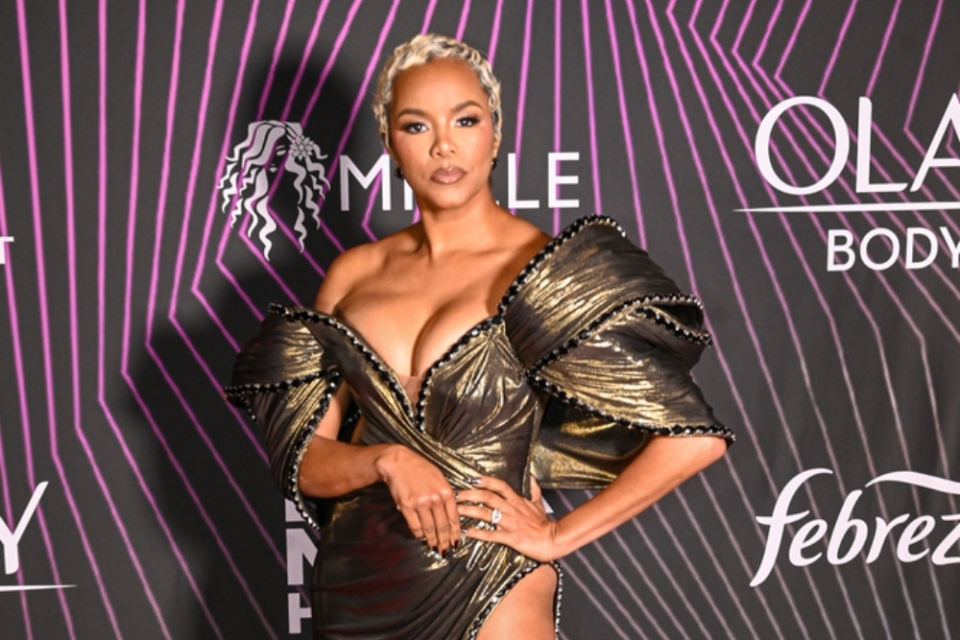

From Destiny’s Child breakout star to platinum-pixied fashion force, her evolution is anything but ordinary.
Long before the word “glow-up” entered the cultural lexicon, LeToya Luckett was living one. Marking her 45th birthday, the Houston-born singer and actress has spent more than two decades defying expectations — both on stage and on the red carpet. Her trajectory, from coordinated pop-group ensembles to daring solo-era streetwear to sleek, sophisticated eveningwear, reads less like a style diary and more like a masterclass in self-reinvention.
Few artists have managed to navigate the overlapping worlds of music, television, and fashion with quite the same ease. But Luckett has done exactly that, threading a needle between cultural relevance and personal authenticity at every turn.
LeToya and the Making of a Pop Culture Fixture
Before the solo albums, before the acting credits, there was Destiny’s Child — one of the best-selling girl groups in music history, with more than 25 million records sold and a pair of Grammy Awards to show for it. Luckett was there at the start, one of the original members who helped build that foundation.
Her departure from the group in 2000 could have been a full stop. Instead, it became a comma. By 2006, she had launched a self-titled debut solo album that went platinum, establishing her not as an afterthought but as a force in her own right. Within three years, she had pivoted toward acting, making her film debut in Killers (2010), then building a television résumé that included the long-running drama Single Ladies and the BET+ series Divorced Sistas. The through-line in all of it: a refusal to be defined by any single chapter.
The Beauty Evolution That Kept Everyone Watching
If Luckett’s career has been a study in reinvention, her beauty evolution has been its visual companion. In the early Destiny’s Child years, she wore red-highlighted hair that cut through the coordinated chaos of early-2000s pop aesthetics like a deliberate provocation. At the 1999 MOBO Awards, that bold hair choice crystallized into something close to a signature — a statement that she was paying attention, even when the world wasn’t fully paying attention to her.
As she stepped into her solo era, the aesthetic softened without losing its edge. White tops, fitted denim, oversized hoops and breezy ponytails with side-swept bangs became her off-duty uniform — effortless in the way that only takes considerable effort to achieve. Her appearance at the 2007 BET Awards gift lounge captured this era perfectly: playful without being frivolous, polished without being stiff.
Shifting Into a More Commanding Presence
The 2010s brought a sharper silhouette. Gone were the laid-back tanks; in came structured blouses and cropped, sleek hairstyles that signaled a woman growing into her own authority. At the 2014 Essence Festival of Culture, she arrived in a ginger bob paired with a pink floral top — a combination that somehow managed to feel both nostalgic and current.
By 2017, she had distilled her aesthetic even further. A chic pixie cut debuted at a Golden Globe after-party, immediately drawing attention. What followed was a years-long evolution of that same cut: from deep black to warm brown, then to platinum highlights, and ultimately to a full platinum finish that has become her most recognizable look to date.
Recent Appearances That Cemented Her Fashion Status
In late 2023, Luckett attended the world premiere of Renaissance: A Film by Beyoncé in a full platinum pixie, red lips, and a fitted leather dress — an ensemble that felt less like an outfit and more like an argument. The look traveled widely across social media, resurfacing conversations about her place in the broader cultural conversation.
More recently, at the 2025 BET Awards, she appeared in dramatic silhouettes with warmer blonde tones replacing the stark platinum, suggesting yet another micro-evolution underway. It is a pattern that has come to define her: never static, never predictable, but always deliberate.
Why LeToya’s Legacy Extends Beyond the Stage
What makes Luckett’s evolution resonate is not merely the aesthetic changes themselves, but the confidence with which she has navigated each of them. There is no apparent anxiety in her reinventions, no sense of chasing trends. Each era looks chosen rather than assigned.
At 45, she stands as a reminder that longevity in entertainment — real longevity — requires more than talent. It requires a willingness to keep showing up, to keep editing the story, and to treat image not as armor but as expression. LeToya Luckett has been doing all three since long before most people were paying close enough attention.
The entertainment industry has a complicated relationship with women who insist on evolving. Luckett appears unbothered by the contradiction. That, perhaps more than any single red-carpet moment, is the real style statement.

