


MDV Edwards
The vibrant Filipino tuber has captivated chefs and home cooks alike — and its moment has only just begun.
What Is Ube, and Why Is Everyone Suddenly Obsessed?
Long before dragonfruit smoothie bowls blanketed Instagram feeds and matcha lattes became a millennial rite of passage, a quietly magnificent purple tuber had already been reigning supreme in Filipino kitchens for centuries. Now, ube — pronounced oo-beh — is stepping out of its regional stronghold and into the global spotlight, and food lovers everywhere are paying attention.
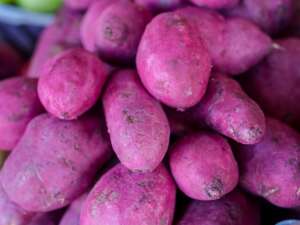
Native to the Philippines and parts of Southeast Asia, ube is a starchy yam with a deep, unwavering violet hue, a mildly sweet flavor, and a velvety interior that lends itself beautifully to desserts and drinks. Unlike many colorful ingredients that fade under heat, ube holds its striking purple color through cooking — a visual advantage that has made it a particular darling of the social media age.
Abi Balingat, a Filipino American recipe developer and author of the James Beard Award-winning cookbook Mayumu, has spent years championing the ingredient. Her perspective offers an essential window into both the cultural richness and the culinary versatility of this underappreciated root.
Ube vs. Purple Sweet Potato vs. Taro: Setting the Record Straight
The confusion is understandable. Walk through any Asian grocery store, and you’ll encounter a trio of purple-ish, starchy roots that look vaguely similar on the surface. But ube, purple sweet potato, and taro are entirely distinct ingredients with different textures, flavors, and biological origins.
Ube belongs to the yam family. It has a tough, inedible skin, a moist interior, and a color that remains vivid even after prolonged cooking. Purple sweet potatoes, by contrast, belong to the morning glory family — making them no relation to ube whatsoever. They have a thinner, edible skin and a somewhat drier texture, with a sweetness that skews more toward the familiar orange sweet potato.
Taro, meanwhile, is another Southeast Asian starchy root that does share the yam family with ube, but the similarities largely stop there. Its color is a pale beige, its texture considerably more fibrous, and its flavor far earthier — with none of ube’s floral sweetness.
What Does Ube Actually Taste Like?
This is where things get interesting. Balingat describes ube as having a delicate nuttiness layered with a rich vanilla quality — earthy, yes, but with a natural sweetness that never overwhelms. The flavor is more nuanced than an orange sweet potato’s caramelized depth; it’s softer, more floral, almost aromatic.
That subtlety is precisely what makes ube such a versatile pairing partner in the kitchen. It harmonizes effortlessly with black sesame, pandan, matcha, and red bean. It also shines alongside coconut, white chocolate, and citrus — ingredients that let its delicate character breathe rather than compete.
How to Buy Ube in the United States
Fresh ube remains difficult to source across much of the country, but the good news is that it’s increasingly available in other forms. Frozen ube — grated, shredded, or cubed — can be found at Filipino and Southeast Asian grocery stores, as can powdered ube, ube extract, and ube halaya, a rich jam made from mashed ube cooked down with milk and sugar into a thick, silky paste.
Ube halaya deserves special mention. It’s arguably the most convenient entry point for home cooks: stir it into cookie dough, swirl it through cake batter, or spread it generously between layers of a celebration cake. The flavor is fully present without any of the prep work.
For those without a local Southeast Asian market nearby, Balingat recommends the online grocery platform Weee!, which carries a wide selection of ube products and ships across the United States.
How Ube Is Used in Cooking — Traditional and Modern
In Filipino cuisine, ube has long anchored some of the country’s most beloved desserts. Halo-halo, the layered shaved-ice treat that functions as the Philippines’ answer to a sundae, frequently features ube ice cream on top. Ube pandesal — soft, pillowy rolls often filled with cheese — have become a bakery staple. And ube hopia, a flaky pastry with a sweet ube filling, offers a more subtle, refined expression of the ingredient.
In recent years, the ingredient’s growing mainstream appeal has inspired a new wave of applications. Modern bakers have woven it into cheesecakes, cinnamon rolls, crinkle cookies, and lattes. Balingat herself favors it in ice creams and dough fillings, celebrating it in ways that honor its roots while welcoming it into contemporary kitchens.
While ube can technically appear in savory preparations, its natural sweetness and floral profile make it a natural fit for desserts. Think of it less as a versatile vegetable and more as a flavor all its own — one that happens to come in the most extraordinary shade of purple.
Source: yahoo!life

