


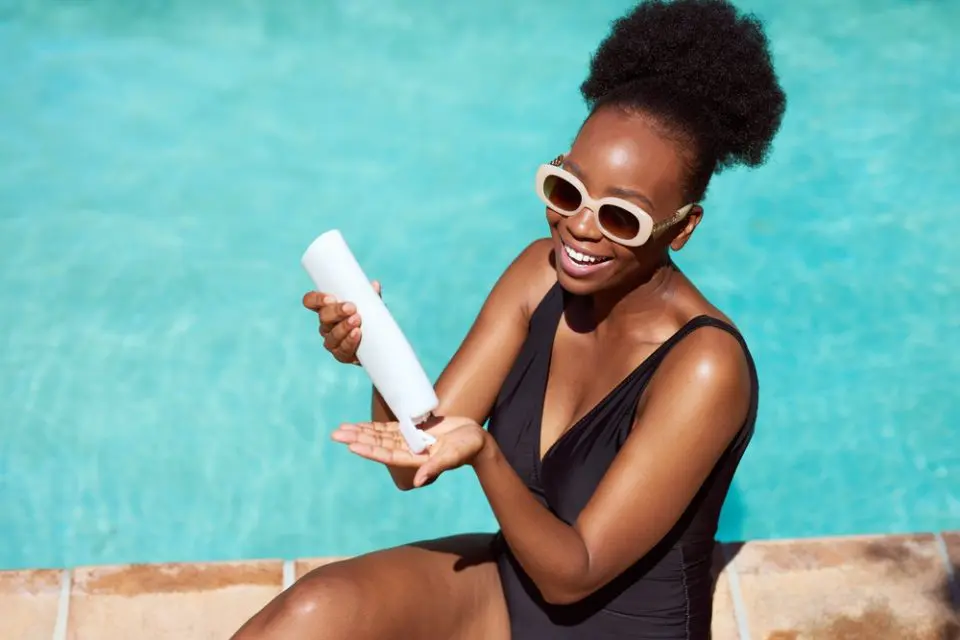

Why melanin isn’t a shield — and which sunscreens actually work for deeper skin tones
For decades, a stubborn myth has circulated in beauty culture and beyond: that dark skin doesn’t need sunscreen. It’s a misconception with real consequences — one that dermatologists and skincare experts say continues to put millions of people at unnecessary risk. The truth is that melanin, while a remarkable pigment, is not a substitute for sun protection. And for people with darker skin tones, finding the right sunscreen has historically come with its own set of frustrations — chalky residue, ashy finishes, and formulas that were clearly never designed with them in mind.
That conversation is finally changing.
The Melanin Myth — and Why It Persists
Melanin does offer some natural defense against ultraviolet radiation. Deeper skin tones are generally less susceptible to sunburn than lighter ones. But “less susceptible” is not the same as “immune,” and confusing the two has created a dangerous gap in how sun safety is communicated.
The myth persists, in part, because dermatology education and media representation have historically centered lighter skin. Discussions about sun damage — the kind featured in public health campaigns and magazine spreads — have long focused on people who burn visibly and quickly. That framing has left darker-skinned individuals with the mistaken impression that the sun isn’t their problem.
It is. People with darker complexions remain vulnerable to UV-induced hyperpigmentation, photoaging, and skin cancer. Repeated, unprotected sun exposure can trigger the formation of dark spots, accelerate premature aging, and — in the most serious cases — lead to melanoma. Sunscreen, worn daily, is one of the most effective tools available to prevent all of it.
Chemical vs. Mineral: Choosing the Right Formula
The sunscreen aisle can be overwhelming. Understanding the two main categories makes the decision significantly easier.
Chemical sunscreens — formulas containing compounds like avobenzone and oxybenzone — work by absorbing UV rays and converting them into heat, which the skin then releases. They tend to be lightweight, leave no white cast, and are often water-resistant. The tradeoff: they require about 15 minutes to activate after application, and some users report sensitivity to certain chemical filters, with ongoing research examining how deeply these ingredients penetrate the skin.
Mineral sunscreens, which rely on zinc oxide and titanium dioxide, sit on top of the skin and physically deflect UV light. They work immediately upon application and are generally better tolerated by sensitive or acne-prone skin. The longstanding knock against them — the dreaded white cast — has been significantly reduced in newer formulations designed with deeper skin tones in mind, though it remains a consideration.
Neither type is universally superior. The best sunscreen is the one a person will actually use consistently.
What to Look for When Shopping
A few key factors should guide any sunscreen purchase:
- SPF: The American Academy of Dermatology recommends a minimum of SPF 30, which blocks roughly 97 percent of UVB rays. No sunscreen eliminates UV exposure entirely, which is why reapplication every two hours — and after swimming or sweating — is essential.
- Broad spectrum: This label indicates protection against both UVA rays, which drive premature aging, and UVB rays, which cause sunburn.
- Skin type: Those with oily or acne-prone skin should look for oil-free, non-comedogenic formulas. Dry skin types benefit from sunscreens that incorporate moisturizing ingredients like hyaluronic acid or ceramides.
- Fragrance-free options: For sensitive skin, fragrances and certain chemical filters can trigger irritation. Mineral formulas tend to be gentler.
- Face vs. body: Facial sunscreens are generally lighter and less occlusive than body formulas. Using both provides comprehensive coverage.
The Best Sunscreens for Dark Skin
The market has improved considerably in recent years. Several formulas now blend seamlessly into deeper skin tones without leaving residue or disrupting makeup.
Full Body Options:
- Black Girl Sunscreen Make It Glow Sunscreen Spray, SPF 30 (Chemical)
- Neutrogena Hydro Boost Moisturizing Gel Sunscreen Lotion, SPF 50 (Chemical)
- Supergoop Play Everyday SPF 50 (Chemical)
- Eucerin Sensitive Mineral Sunscreen Lotion SPF 50 (Mineral)
Facial Options:
- Trader Joe’s Daily Facial Sunscreen SPF 40 (Chemical)
- Biossance Zinc Sheer Hydrating Mineral Face Sunscreen SPF 30 (Mineral)
- La Roche-Posay Melt-In Milk Sunscreen SPF 60 (Chemical)
- EltaMD UV Clear Tinted Face Sunscreen, SPF 46 (Mineral)
Applying Sunscreen the Right Way
Application technique matters as much as product selection. Dermatologists recommend applying roughly two tablespoons — approximately a shot glass worth — of sunscreen at least 15 minutes before sun exposure. For those who wear makeup, setting sprays and powder sunscreens offer a practical solution for midday reapplication without disrupting a finished look.
Sun protection isn’t a summer-only habit. UV rays penetrate cloud cover and reflect off surfaces year-round. For anyone serious about maintaining healthy skin — and reducing the long-term risks of UV exposure — daily sunscreen use is non-negotiable, in January just as much as July.
For personalized guidance on the right formula, a board-certified dermatologist remains the most reliable resource.

