


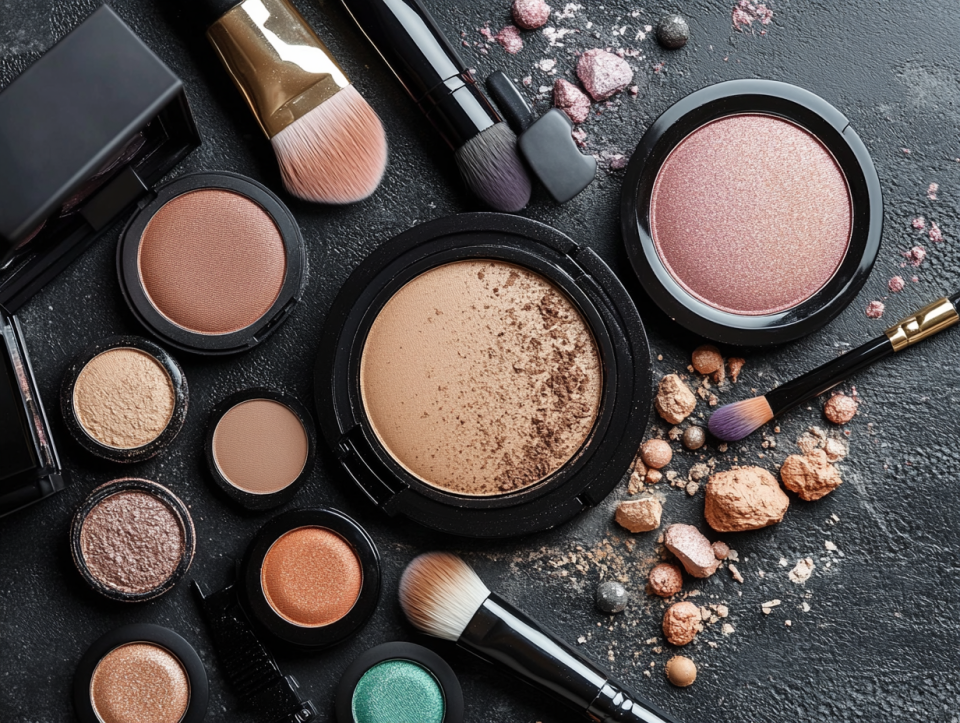

Cool-toned, barely-there pinks are replacing the bold blushes that defined recent years, and the shift feels less like a trend and more like a correction.
Bold blush had a good run. The saturated Barbie pinks and sunburnt reds that swept through beauty feeds for the past few years made their point loudly and clearly. But something quieter is taking over, and it’s making the louder stuff look like it’s trying too hard.
Cherry blossom blush is built around muted, cool-toned pinks that settle into the skin like a natural flush rather than sitting on top of it. The result is softer, more diffused, and deliberately understated. Think pale pink, soft lilac, dusty mauve. Nothing that announces itself from across the room.
Celebrity makeup artist Christian Briceno describes the technique as one that uses pale pinks and soft lilacs to build a smooth, radiant finish. The color appears almost translucent, letting the skin itself do the work while the blush plays a supporting role. The overall effect reads as youthful and romantic without veering into costume territory.
Where this trend actually comes from
Cherry blossom blush did not emerge from a vacuum. Its aesthetic roots run deep in Korean and Japanese beauty traditions, where a soft-focus flush has been a foundational element of the makeup approach for years. The idea of skin that glows rather than makeup that performs is central to both K-beauty and J-beauty philosophy, and this trend is a direct extension of that sensibility.
What has changed is the audience. The look is now gaining traction in the United States, partly through TikTok, where creators have been showcasing muted blush techniques to significant engagement. It also arrives at a moment when cool-toned makeup is broadly resurging, carrying a nostalgic echo of 1990s aesthetics that has been threading through fashion and beauty for several seasons.
Briceno notes that cherry blossom blush fits naturally into the current makeup mood, which tends toward diffused eyeliner, muted nude lips, and an overall softness that reads as deliberate restraint. The combination creates something that feels doll-like without being overdone.
How to find the right shade for your skin tone
Getting the cherry blossom look right starts with choosing a shade that works with your undertones rather than against them. For fair skin, pale pinks are the most natural fit. Those with olive undertones tend to find that soft lilacs land better. Deeper complexions generally respond well to dusty mauves, which provide enough depth to register without pulling warm.
The one consistent rule across all skin tones is to avoid warm shades entirely. Peach, coral, and terracotta all pull in a direction that works against the cool, airy quality that defines cherry blossom blush. Even a slightly warm pink can shift the whole look.
For those who want a bit more presence without losing the softness, Briceno suggests layering. Start with a cool-toned blush as the base, then add a small amount of a more vivid pink directly on the apples of the cheeks. The effect mimics the concentrated color at the center of a cherry blossom, adding dimension without disrupting the overall delicacy of the look.
Another approach worth trying is mixing a liquid blush with a moisturizer before application. The result is sheer and skin-like, landing somewhere between color and a watercolor wash.
The application method matters as much as the shade
Shade selection only gets you halfway there. How the blush goes on determines whether it integrates with the skin or floats above it.
Briceno recommends using fingers alongside a medium fluffy brush to work the product in. Fingers warm the formula and help it sink into the skin, while the brush diffuses the edges so there is no clear line where the color begins or ends. The goal is for the flush to look like it came from within rather than from a compact.
This approach treats skin as the foundation and the blush as something that enhances what is already there. It is less about adding color and more about amplifying something the skin already does on its own.

