


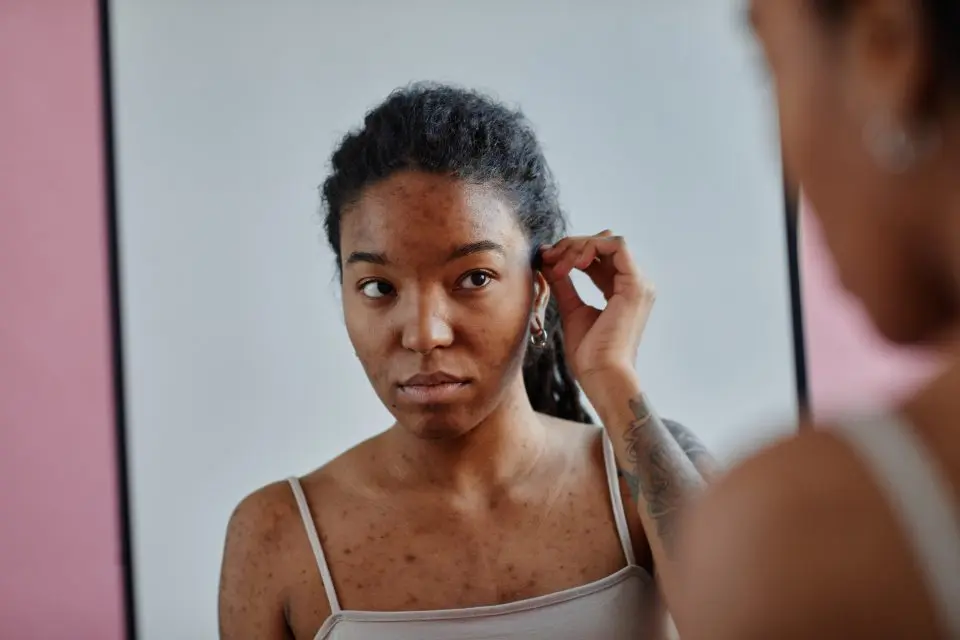

Fading dark spots and smoothing skin texture is possible. Here’s what the science — and real experience — says about getting lasting results.
Clear skin is the goal. But for many of us, even after the breakouts subside, the evidence lingers — flat dark marks, uneven tone, or subtle dips in texture that no filter fully hides. Acne scars and dark spots consistently rank among the most searched skincare concerns, and it’s easy to understand why: they’re stubborn, they’re confusing, and the beauty industry floods us with promises that rarely pan out.
Here’s what actually does.
Not Every Mark on Your Face Is a Scar
Before throwing money at a solution, it pays to understand what you’re working with. Most of what people call acne scars are actually post-inflammatory hyperpigmentation (PIH) — flat, discolored patches left behind after a breakout heals. They’re particularly prevalent in melanin-rich skin and can stick around for months without targeted treatment.
True acne scars are a different story. These involve actual changes in skin texture — either indented (atrophic) or raised (keloid). The distinction matters because the treatment approach differs significantly.
What Actually Fades Dark Spots
If your marks are flat and pigmented, the following ingredients and habits deliver consistent, proven results.
Sunscreen — the non-negotiable first step
It’s the step most people skip, and the reason their spots refuse to budge. UV exposure deepens hyperpigmentation and makes it more resistant to treatment. Daily SPF 30 or higher — yes, even indoors, even on cloudy days — is the foundation everything else builds on.
Vitamin C for brightness and tone
One of the most reliable ingredients for targeting discoloration, a Vitamin C serum used consistently every morning can produce visible improvements in skin brightness within three to four weeks. It won’t perform miracles overnight, but paired with sunscreen, the combination is hard to beat.
Retinoids for faster cell turnover
Retinoids — whether over-the-counter retinol or prescription-strength options — speed up the skin’s natural shedding process, pushing pigmented cells out faster. The key is starting slow: two to three times per week to avoid irritation. Overdoing it, especially in deeper skin tones, can actually worsen dark spots.
Chemical exfoliants, used wisely
Glycolic acid, lactic acid, and salicylic acid all help remove the dead skin buildup that makes spots more visible. But more is not better here. Stick to one to two uses per week. Over-exfoliating triggers inflammation — which means more pigmentation, not less.
Targeted treatments worth adding
Niacinamide, azelaic acid, and alpha arbutin are underrated heavy hitters for discoloration. Layering one of these alongside a retinoid or Vitamin C often accelerates results without the irritation risk of more aggressive options.
Addressing Acne Scars and Skin Texture
When it comes to actual textural scarring — indents, pitting, raised areas — topicals can only do so much. This is where in-office treatments earn their place.
- Microneedling stimulates collagen production and gradually smooths indented scars over multiple sessions.
- Chemical peels performed by a professional go deeper than at-home exfoliants and can address both tone and texture simultaneously.
- Laser treatments are among the most effective options for deeper scarring, though they require a skilled, experienced provider — particularly for darker skin tones, where the risk of complications is higher.
Habits That Keep Spots Around Longer
Even a well-chosen routine can stall if certain habits go unchecked. Here’s what to stop doing:
- Picking at active breakouts — one of the fastest routes to long-lasting marks
- Trying too many new products at once, which causes irritation and more pigmentation
- Skipping moisturizer, which slows barrier repair and healing
- Expecting overnight results — most treatments need six to 12 weeks to show real change
A Simple Skincare Routine That Delivers
Complexity is overrated. A focused, consistent routine will outperform a 10-step shelf any day of the week.
Morning
- Gentle cleanser
- Vitamin C serum
- Moisturizer
- Sunscreen (SPF 30 or higher)
Night
- Cleanser
- Retinoid (a few nights per week) or chemical exfoliant (one to two times weekly)
- Moisturizer
That’s it. Consistency beats complexity — always.
No viral trend, no miracle serum, no 48-hour transformation is going to outperform doing the right things, reliably, over time. Most people start seeing noticeable fading within four to eight weeks, with more significant improvement building over several months. The secret, if there is one, is simply showing up for your skin every day — and resisting the urge to abandon what’s working before it has a chance to work.

