


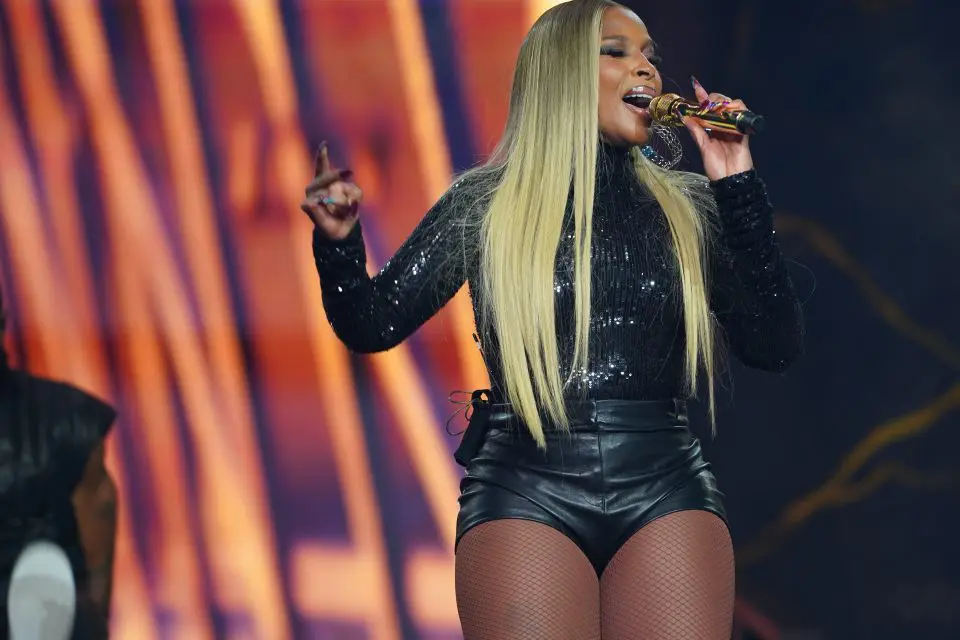

Long before the awards, the residencies, and the legacy, there was a woman on the edge. Mary J. Blige has built a career on turning wounds into anthems, but the real story behind those songs is far more harrowing than any album cover could suggest.
The Music That Mirrored Her Darkness
Few artists have weaponized vulnerability the way Blige has. Her 1994 record My Life wasn’t just a commercial release — it was a lifeline thrown into the world during one of the most turbulent stretches of her personal history. At the time, she was deep in the grip of substance abuse, and the album became a distress signal dressed in R&B. Years later, her follow-up Growing Pains continued that thread, confronting the ongoing cost of healing in real time.
Speaking to the New York Times in 2007, Blige described the album as born of relentless struggle — a reflection of everything it took to reach a place of genuine breakthrough, knowing the work was far from over.
Blige’s Breaking Point and the Choice That Saved Her
By 2001, things had reached a point of no return. Blige has spoken openly about the moment she stood at a crossroads between life and death, after years of battling alcohol and drug dependency. The choice, as she described it, was brutally simple: survive or surrender. She chose to survive — and she turned to prayer as her first act of resistance.
That prayer, she would later recount, felt like a direct cry for someone to enter her life and anchor her through the chaos. What followed was a chapter she believed was the answer.
The Relationship That Steadied Her — Then Shook Her
Kendu Isaacs walked into Blige’s life at her most fragile moment. She has credited him with pushing back against the destructive patterns that had consumed her, challenging her in ways no one else had dared to. He wasn’t afraid to go against the current, and that friction — in the most constructive sense — helped her find solid footing. The two married in 2003, with Isaacs later becoming her manager and a collaborator on her music.
But what began as a lifeline eventually unraveled. By 2016, Blige had filed for divorce, citing infidelity and financial misconduct. As the household’s primary earner, she was ordered to pay temporary spousal support while proceedings moved forward. Their divorce was finalized in 2018, closing one of the most defining and complicated chapters of her adult life.
The Girl She Wishes She Could Have Protected
In her most reflective moments, Blige has returned to the image of her younger self — the girl who just wanted to sing and had no roadmap for the industry that would consume her. She has spoken of a woman who gave endlessly to others while rarely receiving anything in return, and how deeply that imbalance wounded her over the years.
It’s a portrait of someone who poured love into the world and found herself running on empty — until she learned, painfully and slowly, that she had to pour some of that love back into herself.
A Legacy Forged in Survival
What makes Mary J. Blige one of the most enduring figures in music isn’t just the voice or the catalog — it’s the fact that she’s still here. She fought through addiction, she navigated heartbreak, she rebuilt after betrayal, and she came out the other side not just intact but iconic. Her story isn’t a cautionary tale; it’s a blueprint. And for the millions of women who’ve seen themselves in her lyrics, that blueprint means everything.
Source: EURweb

