


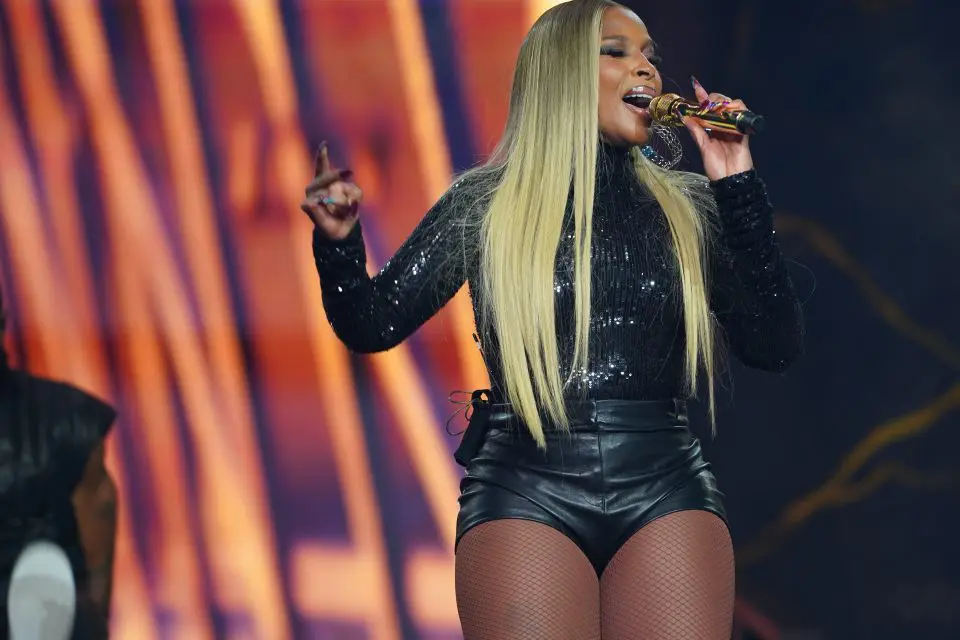

An uneasy first meeting, resurfaced stories and industry whispers continue to shape how fans revisit one of pop and R&B’s most talked-about tensions.
Mary J. Blige has always moved with intention. Crowned the Queen of Hip-Hop Soul, her legacy is built on truth-telling, vulnerability and a voice that carries generations of emotion. For decades, she has navigated the music industry with grace, choosing authenticity over spectacle. Still, even icons have moments that linger — and for Blige, one early encounter with Christina Aguilera remains unforgettable.
Early Tensions in a Competitive Era
The 1990s and early 2000s were a defining time for R&B, especially for Black women carving out space in a rapidly shifting industry. Blige stood at the center of it all, blending hip-hop edge with soul-baring honesty. As her influence grew, so did comparisons — particularly with fellow singer Faith Evans.
Both artists occupied similar lanes, and with Evans signed to Bad Boy Records, conversations about rivalry became part of the narrative. While Blige rarely engaged in public back-and-forth, the pressure of constant comparison underscored a broader truth: Black women in music are often placed in competition, whether they ask for it or not.
Blige, however, remained focused on her evolution, choosing growth over noise.
The First Impression That Changed Everything
When Blige first crossed paths with Christina Aguilera, the moment did not unfold with the warmth or mutual respect she expected. What should have been a simple introduction left her feeling unsettled — a reaction that would shape her perception of the pop star for years to come.
For Blige, respect isn’t optional — it’s foundational. Her journey has been rooted in realness, and she has always valued how people show up, not just what they bring to the stage. That initial interaction with Aguilera, as she later described, signaled a disconnect in values.
And for Blige, first impressions carry weight.
Rather than turning the moment into public drama, she internalized it, letting it inform how she moved moving forward. It wasn’t about headlines — it was about principle.
More Than Talent: The Power of Presence
In an industry that often prioritizes chart success, Blige’s perspective offers something deeper. Talent may open doors, but character sustains a career. The way artists treat others — from peers to collaborators — can shape opportunities just as much as their vocal ability.
Blige has long embodied that balance. Her career reflects not only musical excellence but also resilience, humility and a commitment to growth. That’s part of what has kept her relevant across generations.
Her stance on Aguilera, then, reads less like conflict and more like clarity — a reminder that energy matters.
Years after their initial meeting, a brief moment at the 2003 MTV Video Music Awards reignited curiosity. As Aguilera performed alongside Britney Spears and Madonna in a now-iconic pop culture moment, cameras caught Blige in the audience.
Her expression — subtle, but unmistakable to fans — quickly became a point of conversation. In today’s social media era, where every reaction can be replayed and reinterpreted, that glance took on a life of its own.
Whether intentional or not, it added another layer to a story fans were already eager to unpack.
A Broader Conversation Around Reputation
Blige’s experience isn’t the only one that has shaped public perception of Aguilera over the years. Other artists have shared moments that, similarly, didn’t leave the best impression.
Singer Avril Lavigne once reflected on an encounter that felt noticeably less warm than others that same evening. Rapper Eminem, too, responded publicly after a personal detail about his life was discussed without his consent, later weaving the moment into his music.
These stories, while individual, contribute to a larger conversation about how artists are experienced behind the scenes. At the same time, they highlight how quickly narratives can form — and how lasting they can become.
Legacy, Growth and Moving Forward
Still, both Blige and Aguilera have secured their places in music history. Blige continues to stand as a pillar of R&B, her work rooted in healing, empowerment and truth. Aguilera remains a vocal powerhouse whose impact on pop music is undeniable.
What remains is not just a story of tension, but a reflection of how moments — even brief ones — can shape perception.
For Blige, it all comes back to authenticity. It’s the throughline in her music, her career and her interactions. And in an industry that often rewards performance over presence, that commitment to being real is what continues to set her apart.
Source: Nicki Swift

