


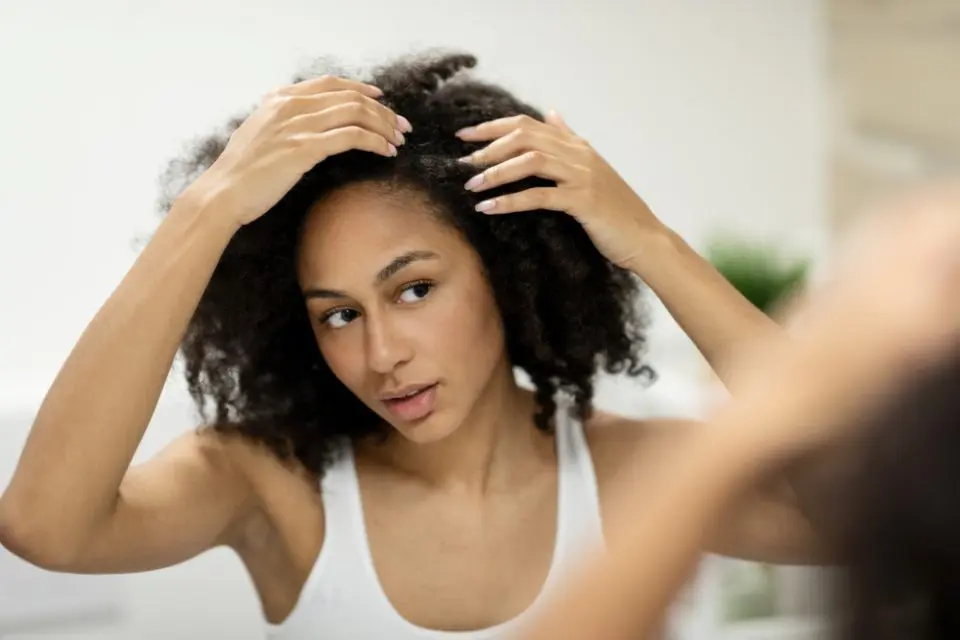

Why the real culprit behind scalp odor has nothing to do with how clean you think you are
You wash your hair every other day. You splurge on the good shampoo. You’ve got a whole routine. And yet, less than 24 hours after wash day, your scalp is already giving off a funk that has you side-eyeing yourself in the mirror. Before you spiral into thinking you’re just “a smelly person,” take a breath — because the problem almost certainly isn’t your hygiene.
The truth is, scalp odor is often caused by biological and chemical factors that your regular shampoo simply isn’t equipped to fix. And in many cases, the harder you scrub and the more often you wash, the worse it actually gets. Here’s what’s really going on.
Yeast Overgrowth Is Scalp’s Sneaky Enemy
Your scalp is home to a naturally occurring mix of bacteria and yeast — and under normal circumstances, they coexist in balance. But when that balance tips, yeast can multiply rapidly, producing a smell that’s musty, slightly sweet and stubbornly persistent no matter how many times you lather up.
Yeast thrives in warm, damp environments with poor airflow, and it explodes in population when your scalp’s pH is thrown off — which, ironically, happens when you over-wash. Shampooing too frequently strips away the good bacteria that keep yeast levels in check, essentially rolling out the red carpet for overgrowth.
The fix isn’t to wash more — it’s to wash smarter. Antifungal shampoos formulated for fungal conditions can actually target the root cause. Cutting back on wash frequency may also help your scalp restore its own natural equilibrium.
Product Buildup Is Creating a Swamp
Leave-ins, scalp serums, dry shampoo, edge control, styling cream — layered day after day, these products create a thick residue on your scalp that traps moisture, blocks airflow and becomes a breeding ground for odor-causing bacteria. Your scalp, quite literally, cannot breathe.
Many people instinctively reach for a clarifying shampoo to combat this, but aggressive clarifying can disrupt pH balance even further and backfire. What your hair and skin actually need is a proper detox treatment — one that dissolves buildup without stripping essential moisture and natural oils. Sometimes, the most effective fix is simply scaling back your product rotation altogether and allowing things to reset naturally.
Your Washing Routine Could Be Working Against You
The way you wash matters just as much as how often. Hot water feels amazing, but it strips natural oils from the scalp and triggers overproduction of sebum — which creates the exact conditions that bacteria love. Scrubbing too vigorously with a scalp massager can damage the skin barrier, leaving your it vulnerable to bacterial growth.
For most people, lukewarm water, gentle application and occasional — not weekly — clarifying is the smarter approach. Knowing your scalp type is everything; what works for your friend’s oily scalp may be completely wrong for yours.
Sweat and Sebum Are a Smell Factory
If you work out regularly or live somewhere humid, your scalp is dealing with a chemistry challenge, not a cleanliness one. Sweat mixing with your scalp’s natural sebum and sitting beneath layers of hair — with limited airflow — creates a potent environment for odor-causing bacteria. Your body is functioning exactly as designed. The issue is containment.
Wearing your hair up after workouts, rinsing your scalp with water after sweating and allowing your hair to air dry rather than trapping heat with a blow dryer can all make a meaningful difference. Still, it’s worth acknowledging that some scalp odor after a tough workout or a humid summer day is entirely normal — not a personal failure.
What Actually Works for Scalp Odor
Treating scalp odor effectively means identifying the actual source rather than defaulting to more washing. Suspected yeast overgrowth? Try antifungal treatments. Dealing with heavy buildup? Scale back products and invest in a real scalp detox. Odor triggered by sweat and heat? Prioritize airflow and rinse more consistently. Washing routine disrupting your pH? Simplify and go gentler.
Scalp odor is not a character flaw. It’s a solvable problem — and once you stop treating it like a hygiene issue and start treating it like the biological puzzle it actually is, the answers become a lot clearer.

