


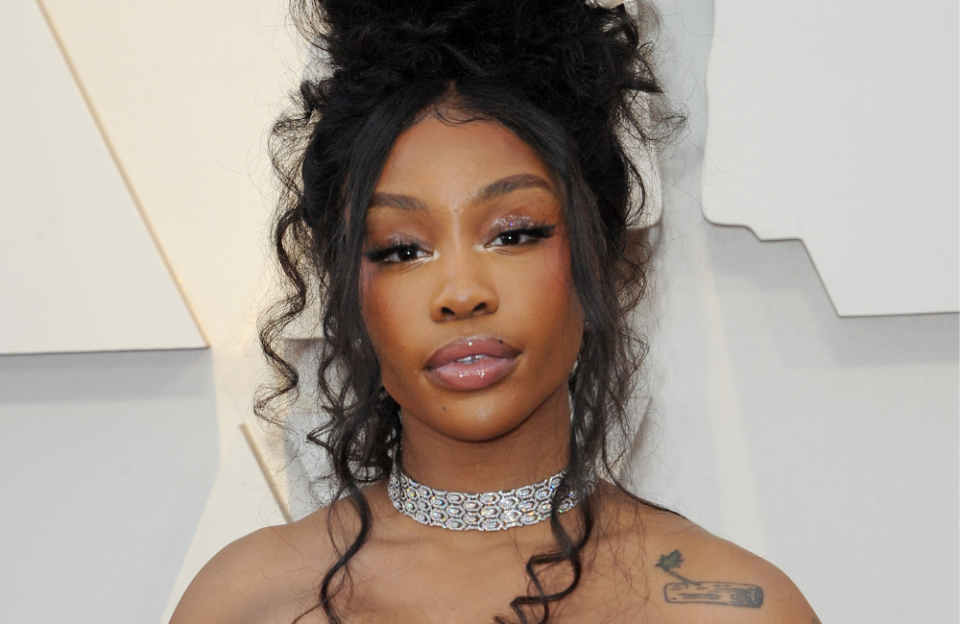

The Grammy-winning artist opens up about the pressures of legacy, unconventional family ideals, and how a decade-long relationship quietly shaped her rise.
SZA has never been one to offer tidy answers. Whether she is dissecting heartbreak through genre-bending pop or weighing in on the messy terrain of modern womanhood, the 35-year-old artist tends to sit inside the question rather than rush toward resolution. That same candor has followed her into conversations about motherhood — a subject she approaches with equal parts curiosity and caution.
SZA and the Weight of Legacy
In a recent conversation with i-D magazine, SZA turned the question of children into something far more philosophical. She spoke about her mother, who had her at age 43, with deep reverence — framing the woman not just as a parent but as a link in a longer chain of feminine power. The mitochondrial thread running through the women before her, she suggested, carries a kind of spiritual weight that demands reckoning.
Her uncertainty around having children was not presented as ambivalence, but as active contemplation. She pondered whether love and magic die with a person who chooses not to pass them on, or whether opting out could itself be the closing chapter of a karmic cycle. It was a rare window into how she holds tension — not paralyzed by it, but genuinely present within it.
A Best Friend, a Bold Ask, and the Future of Family
If SZA does become a mother, she has a very specific vision for what that might look like — and it involves her best friend. During a 2024 appearance on the SHE MD podcast, she described floating the idea of co-parenting or fostering a child together to her closest confidante. The friend, who SZA described as both her anchor and the sharpest person she knows, declined — citing an already overwhelming schedule.
But SZA was not deterred. She made clear she intends to keep lobbying, framing her campaign with a mixture of humor and sincerity. Even if formal co-parenting never materializes, she envisions a kind of informal arrangement — one in which her best friend plays a structural role, functioning almost like a co-parent in spirit if not in practice. It is the sort of creative reimagining of family that reflects how a generation of women is quietly rewriting what domestic life can mean.
The Relationship That Quietly Shaped Her Career
What gives SZA’s reflections on love and family an added dimension is the shadow of a long relationship she has rarely addressed in full. In a December interview with Zane Lowe, she revealed that her musical origins were inseparable from an 11-year relationship with a former fiancé — a man eight years her senior whose identity she has kept private.
He was, she said, the financial architecture of her early life — covering her food, clothes, and housing during a period when she was still finding her footing. She acknowledged the codependency that came with that dynamic, describing music, in its earliest form, less as a calling and more as an act of assertion. She wanted to prove something. To herself, perhaps, but most immediately to him.
That framing recontextualizes the emotional rawness that has always marked her work. Songs that read as confessional were, in part, born from a very specific power imbalance — one she has since moved far beyond, but which clearly left its mark on how she understands intimacy, independence, and what it means to build something entirely her own.
Taking Her Time, On Her Own Terms
Today, SZA is deliberate about the pace at which she moves — in music, in relationships, and in life planning. Her romantic life remains largely shielded from public view, a boundary she has maintained with consistency even as her celebrity has grown exponentially.
What comes through most clearly in each of these conversations is not uncertainty, but ownership. She is not waiting to feel ready in some idealized sense. She is watching, thinking, and holding space for the version of her future that feels true — whether that includes children or not, whether it looks traditional or entirely of her own design.
For an artist who has built a career on sitting with the unresolved, it makes perfect sense. The most honest songs rarely have a clean ending. Neither, it seems, does the story she is still writing for herself.
Source: EURweb

