


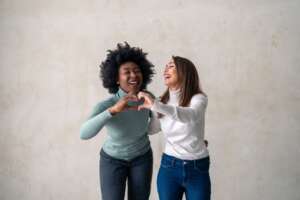
Every year on March 8, the world pauses to recognize the achievements of women, reflect on the distance still to travel and amplify the voices of those who dedicated their lives to the fight for equality. International Women’s Day 2026 carries the theme Rights. Justice. Action. For ALL Women and Girls, a direct call to dismantle the legal, social and cultural barriers that continue to disadvantage women in nearly every country on earth.
The urgency behind that theme is grounded in data. According to the United Nations, women worldwide currently hold only 64% of the legal rights that men hold. In areas including work, finances, property ownership, family law, mobility and retirement, legislation continues to systematically fall short for women. No country has yet fully closed that legal gap, which means this year’s theme is not aspirational rhetoric. It is a description of work that remains unfinished and cannot wait.
This day exists because of generations of women who refused to accept the world as it was. They organized, marched, wrote, argued in courtrooms and spoke truth to power at considerable personal cost, so that the women who came after them would inherit more options, more protection and more dignity. Their words remain.
Quotes from women who shaped history
These 25 voices, drawn from scientists, activists, artists, athletes and leaders across generations and continents, capture the breadth and depth of the women’s rights movement and the enduring wisdom of the people who drove it forward.
Maya Angelou, civil rights activist and poet, on what it means for one woman to stand up for herself and what that act does for all women.
Ruth Bader Ginsburg, former U.S. Supreme Court Associate Justice, on why women belong in every space where decisions are being made.
Marie Curie, physicist and chemist, on replacing fear with the desire to understand.
Eleanor Roosevelt, activist and former First Lady, on the relationship between women and the making of history.
Gloria Steinem, journalist and feminist, on why the world should be shaped around women rather than the other way around.
Serena Williams, tennis champion and entrepreneur, on courage, genuine kindness and the responsibility to lift others.
Savitribai Phule, Indian educator and social reformer, on education as the most transformative force available to women.
Margaret Thatcher, former Prime Minister of the United Kingdom, on what women are actually capable of when given the opportunity.
Katherine Johnson, NASA mathematician, on the limitless potential of girls everywhere.
Audre Lorde, writer and civil rights activist, on why one woman’s freedom is inseparable from every other woman’s freedom.
Malala Yousafzai, education activist, on the one thing that authoritarian systems consistently fear most.
Michelle Obama, lawyer and author, on what entire nations lose when they suppress the potential of half their population.
Arundhati Roy, Indian author, on the possibility of a better world that is already on its way.
Emma Watson, actress and advocate, on feminism as an act of liberation rather than a tool for judgment.
Indra Nooyi, former chairman and CEO of PepsiCo, on why investing in girls is not charity but sound economic strategy.
Rihanna, singer and businesswoman, on what it takes to thrive in spaces that were never designed with you in mind.
Hillary Clinton, former U.S. Secretary of State, on why human rights and women’s rights cannot be separated from each other.
Sheryl Sandberg, technology executive and writer, on a future where the word leader carries no gender at all.
Florence Griffith Joyner, Olympic gold medalist, on refusing to let anyone else’s limited imagination define what is possible.
Chimamanda Ngozi Adichie, author and speaker, on the world-altering power that lives inside a single voice.
Jane Goodall, primatologist and conservationist, on the obligation to speak for those who have no platform of their own.
Juno Dawson, English author, on the equal validity, worth and beauty of every single person.
Tarana Burke, American activist, on why empowerment requires the willingness to see yourself in someone else’s struggle.
Mae Jemison, American engineer and astronaut, on the importance of refusing to be defined by the smallness of another person’s expectations.
Carolina Herrera, Venezuelan American fashion designer, on finding inspiration not in galleries or books but in the women encountered every day.
Why every one of these voices still matters in 2026
The women behind these words lived and worked in different centuries, on different continents, in entirely different fields. What they share is a refusal to accept the world as fixed, a conviction that the gap between what is and what should be is not a natural condition but a constructed one, and therefore one that can be changed.
Progress has been real and hard-won. Women have broken barriers in science, law, politics, sport and business that previous generations could not have imagined reaching. Yet the United Nations data makes clear that structural inequality is not a relic of the past. It is embedded in the systems that govern daily life right now, in 2026, in every country on earth.
International Women’s Day is both a celebration and a challenge. It honors the women who cleared the path while insisting that the path is not yet finished. The theme this year states it plainly rights without justice are incomplete, and justice without action is hollow.

