


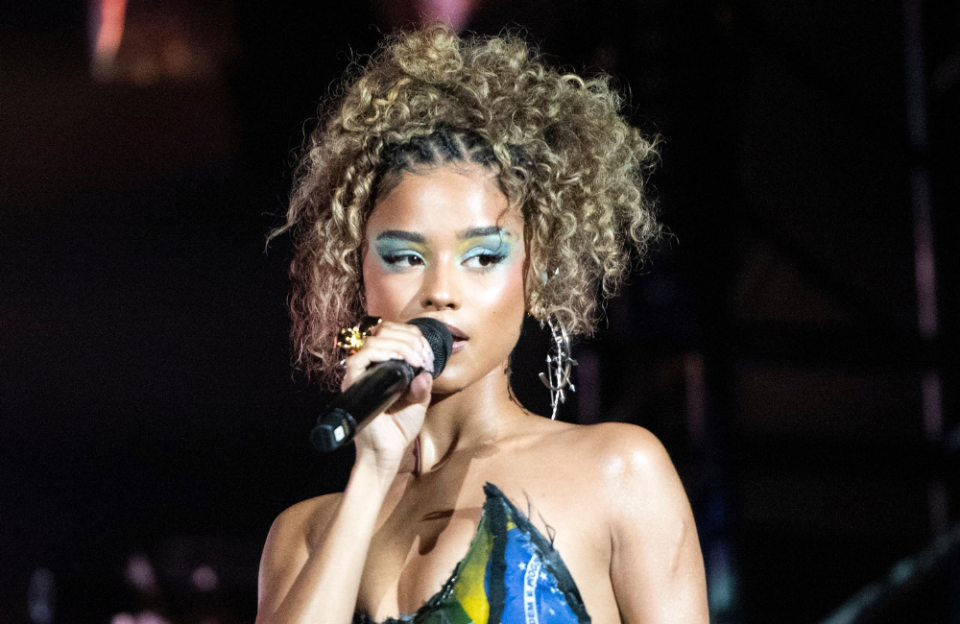

The Water hitmaker opens up about the backlash that followed her viral 2020 TikTok, and why she’s ready to move past it.
Tyla Sets The Record Straight
Tyla is done letting a years-old TikTok define the conversation around her identity. The 24-year-old Johannesburg native, who made history as the youngest African artist ever to win a Grammy, recently opened up about the firestorm that erupted in 2023 after an old clip resurfaced online. In it, she had described herself as “a coloured South African,” a comment that sparked what some outlets dubbed a full-blown culture war once it reached American audiences.
Speaking candidly, the singer admitted the early days of the backlash caught her off guard. She explained that she had never before needed to justify a term she grew up using without a second thought, and the sudden demand for an explanation left her unsure of how to respond.
A Term Rooted In South African History
For Tyla, whose heritage spans Indian, Mauritian, Irish and Zulu roots, the word carries a very different weight back home than it does in the United States. In South Africa, “coloured” refers to a specific mixed-race community and was formally recognized as one of four racial classifications under apartheid, alongside Black, white and Indian identities. It’s a label many South Africans of mixed heritage still embrace as a marker of culture and shared history, not an insult.
That history stands in sharp contrast to the term’s connotation stateside, where it echoes the language of Jim Crow-era segregation and “whites only” signage. Tyla acknowledged that gap directly, noting that her own country has derogatory terms of its own, and that she understands why an outsider using a loaded word in an unfamiliar context could strike a nerve.
Learning To Navigate Two Worlds
As her platform grew, Tyla said she began to understand just how differently language can land depending on where in the world you’re standing. She described the classification as something she simply checked on a box growing up, a fact of life rather than a political statement. Only after touring internationally did she grasp how deeply context shapes meaning.
She also framed the identity as something born from pain rather than convenience, tracing it back to a period when communities were forcibly separated and assigned labels, and how those labels were later reclaimed as a source of cultural pride. Rather than dodge the topic, Tyla said she hoped the moment could spark understanding on both sides, encouraging fans confused by the term to keep the dialogue going. Still, she conceded the debate may never fully resolve itself, admitting the conversation shifts meaning everywhere she travels and that she’s chosen to step back from trying to control the narrative entirely.
From Mining Engineering To Making History
Before Amapiano stardom, Tyla was on track to pursue a degree in mining engineering. She put that path on pause to chase music, independently releasing her debut single Getting Late in 2019 before catching fire online. The gamble paid off in a major way.
Her 2023 breakout single Water topped charts in the UK, US and South Africa, fueled by a viral dance trend, and made her the first-ever recipient of the Grammy for Best African Music Performance. She used her acceptance speech to champion the diversity of African music, pushing back on the tendency to lump every African artist under the Afrobeats umbrella and spotlighting Amapiano’s distinct blend of house, jazz and kwaito influences.
Tyla’s Continued Rise
Since then, Tyla has only built momentum, picking up a second Grammy for Push 2 Start and dropping her sophomore album, APop*. Through it all, she’s remained rooted in the culture that shaped her, using her growing global platform to educate as much as she entertains.
Source: Daily Mail

